Gallery4
The Evolution of Power Transformers: From Steam Age to Modern Grid
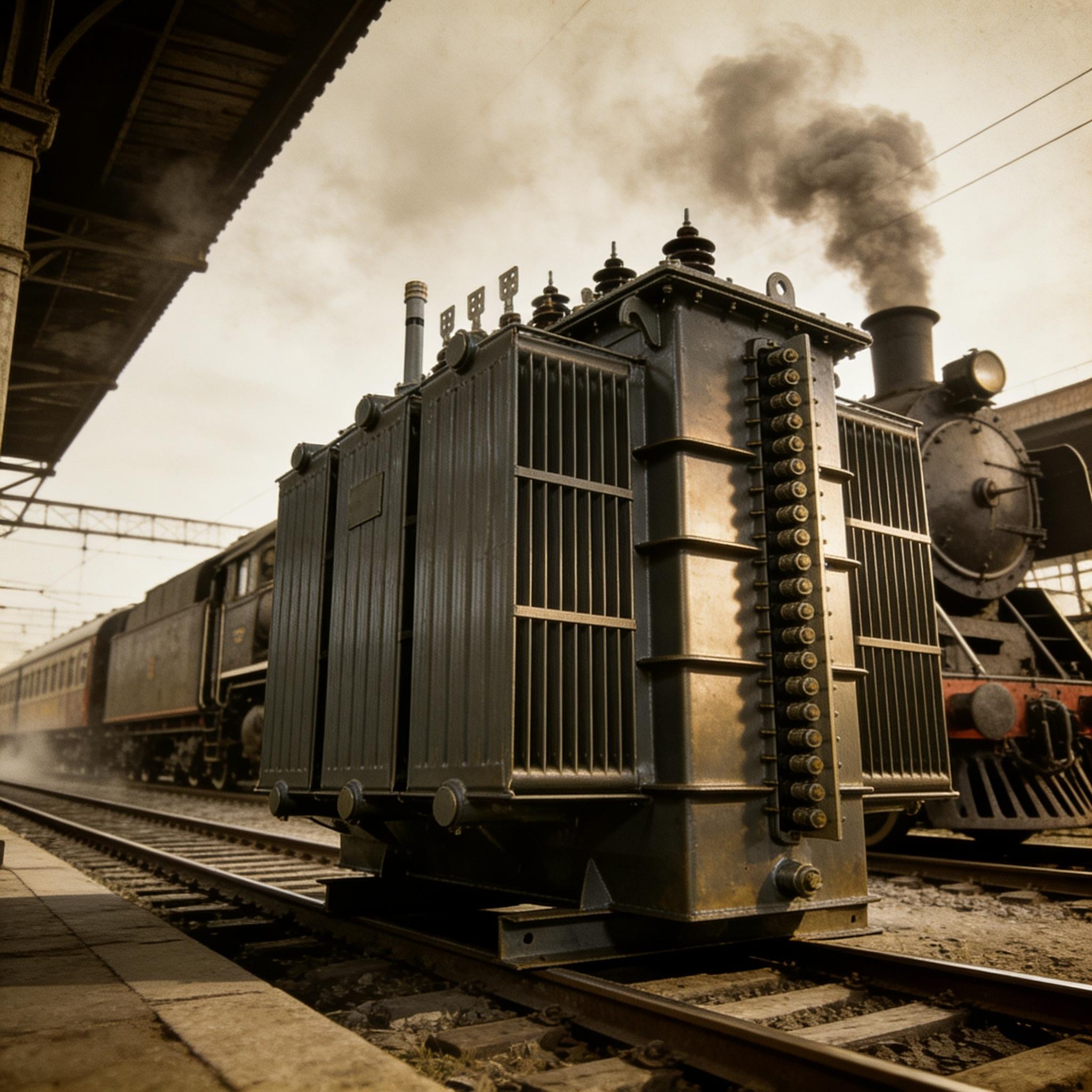
The history of power transformers is the history of the modern electrical grid, a story of innovation and engineering that has shaped the world we live in today. This image captures a vintage-style power transformer alongside a steam locomotive, a powerful visual metaphor for the evolution of energy technology from the industrial revolution to the modern era. The steam locomotive, a symbol of the 19th-century industrial age, and the power transformer, the backbone of the 20th-century electrical grid, together represent the transition from mechanical to electrical power, a transformation that revolutionized human civilization.
The first practical power transformer was invented in 1885 by the Hungarian engineers Károly Zipernowsky, Ottó Bláthy, and Miksa Déri, a breakthrough that made long-distance AC power transmission possible. Before the transformer, electricity was generated and distributed at low voltage, limiting its reach to small areas around power plants. The transformer allowed for stepping up voltage for long-distance transmission, reducing line losses, and stepping it down for safe use by consumers, making the modern electrical grid a reality.
The vintage transformer in this image is a direct descendant of those early designs, a rugged, reliable workhorse that powered the expansion of railroads, factories, and cities in the late 19th and early 20th centuries. These early transformers were built with heavy steel tanks, copper windings, and mineral oil cooling, a design that has proven so effective that it remains the foundation of modern transformer technology, more than 130 years later. The steam locomotive, which relied on coal and mechanical power, was quickly overtaken by electric trains, powered by transformers that stepped down grid power for railway electrification, a transition that revolutionized transportation.
Today, power transformers have evolved dramatically, incorporating advanced materials, digital monitoring systems, and smart grid technology, but their core function remains the same: to transform voltage for efficient, reliable power transmission and distribution. Modern transformers are more efficient, more compact, and more intelligent than ever before, with features like online monitoring, predictive maintenance, and grid stabilization capabilities. They are essential for integrating renewable energy into the grid, powering electric vehicles, and building the smart grids of the future.
This image is a powerful reminder of how far we have come, and how far we have yet to go. The steam locomotive, a marvel of its age, has been replaced by electric high-speed trains, powered by advanced transformers. The vintage transformer, a workhorse of the industrial age, has evolved into a smart, connected device that is the foundation of the modern energy system. For our company, this history is a source of inspiration. We build on the legacy of those early engineers, continuing to innovate and improve transformer technology, delivering solutions that meet the needs of the 21st-century energy landscape.
From the steam age to the digital age, power transformers have been the constant, the invisible force that powers progress. This image captures that legacy, a bridge between the past and the future, a reminder that every innovation in energy is built on the foundation of reliable, efficient power transformers. For our customers, this means that when they choose our transformers, they are choosing a technology with a proven track record of over a century, backed by the latest engineering innovation, ensuring their power infrastructure is ready for whatever the future holds.